

Choosing the right study abroad consultants can help students make informed decisions about university selection, course eligibility, application requirements, education costs and student visa procedures. A reliable overseas education consultant stands out through personalised counselling, transparent guidance, relevant expertise and structured support throughout the application journey.
For students and parents in Pune, the challenge is not simply finding a consultant, but identifying one who understands their academic goals, respects their budget and explains available options clearly. From comparing universities and exploring scholarships to preparing application documents and understanding visa requirements, every decision deserves careful consideration.
Whether you are searching for study abroad consultants in Pune, comparing overseas education consultants or exploring options for international admissions, it is important to understand what professional guidance should include.
This guide explains the qualities and services to look for in a study abroad consultant and how GS Global Academy can support students exploring international education opportunities.
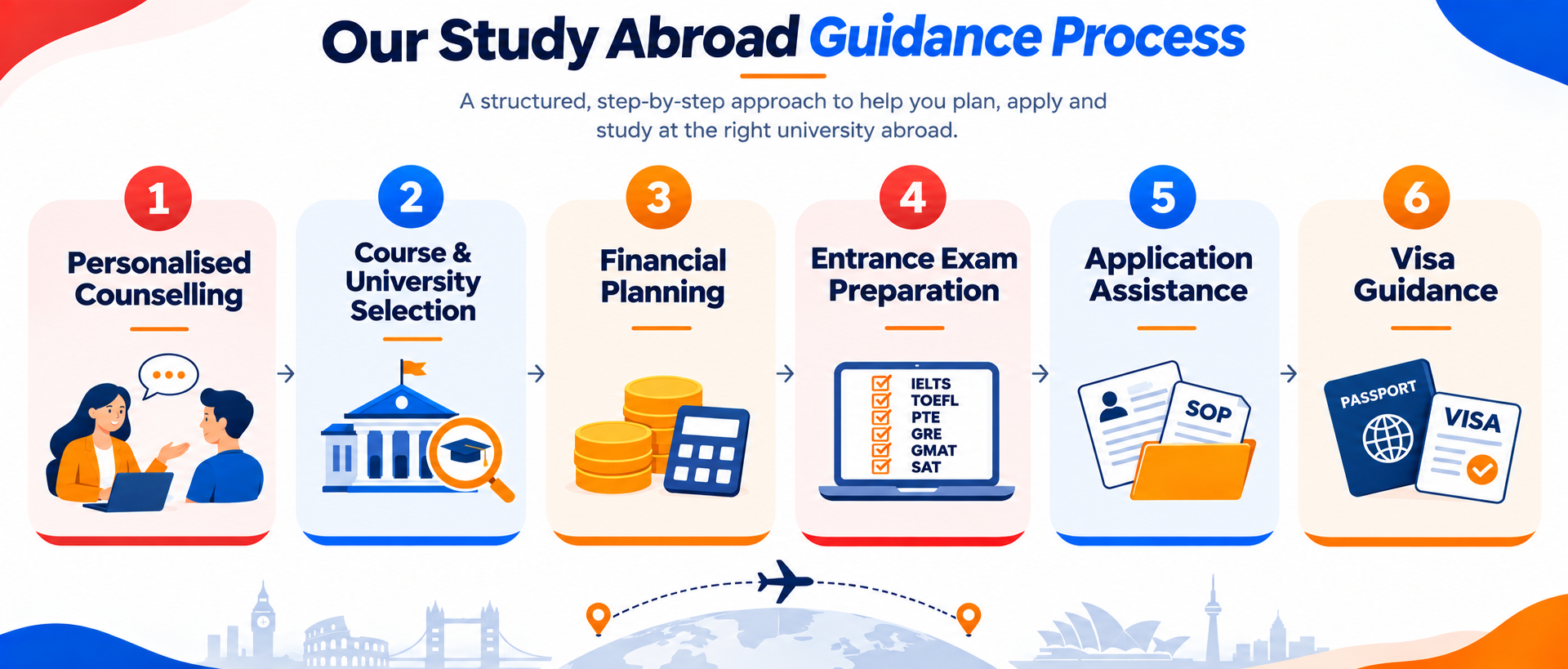
1. Personalised Study Abroad Counselling
Personalised counselling helps students identify overseas education opportunities that align with their academic background, interests, budget and future aspirations.
No two students have exactly the same goals. While one may want to pursue engineering or computer science, another may be interested in business management, healthcare, design or research. A suitable study plan begins by understanding the individual rather than recommending popular destinations or courses without evaluating the student’s profile.
A useful counselling process should consider the following factors:
- Assess Academic Background: Review previous qualifications, academic performance, relevant experience and subject preferences to understand which programmes may be suitable.
- Identify Career Aspirations: Discuss the student’s interests and long-term goals to connect course selection with potential career pathways.
- Evaluate Financial Constraints: Consider the available budget, family expectations, tuition fees, living expenses and other financial commitments before narrowing down options.
- Understand Destination Preferences: Discuss preferred countries, lifestyle expectations, language requirements, climate and other practical considerations.
- Create a Clear Roadmap: Establish practical next steps, including university research, examination preparation, document collection and application deadlines.
The value of counselling lies in helping students understand their options and make informed choices. It should provide direction without creating unrealistic expectations or pressuring students into decisions.
2. Choosing the Right Course and University
The right university is one that matches a student’s academic needs, eligibility, financial circumstances and preferred learning experience, not simply the one with the highest ranking.
University selection requires more than comparing names and locations. Students should examine the actual programme, its admission requirements, available learning opportunities and the total cost of attendance.
A structured comparison makes it easier to identify suitable options.
- Compare Course Content: Examine subjects, specialisations, practical projects, research opportunities and teaching methods to determine whether a programme matches the student’s interests.
- Check Admission Criteria: Verify academic prerequisites, language test requirements, work experience expectations and other eligibility conditions directly with the institution.
- Evaluate University Quality: Consider relevant accreditation, faculty expertise, learning resources, programme structure and institutional reputation alongside rankings.
- Review Career Resources: Investigate internship opportunities, industry connections, career services and practical learning options where relevant to the chosen programme.
- Build Balanced Shortlists: Compare ambitious choices, realistic options and suitable alternatives based on the student’s profile and the institution’s actual requirements.
Students should also check whether the qualification is recognised for their intended career or further studies. A careful selection process helps them understand the advantages, limitations and financial implications of each option before applying.
Good abroad admission consultants should explain why a particular university or course may suit a student’s profile rather than recommending institutions based only on popularity.
3. Transparent Financial Planning for Overseas Education
Financial planning helps students and parents understand the full cost of studying abroad before committing to a university or programme.
Tuition fees are only one part of overseas education expenses. Accommodation, food, transport, insurance, travel, application fees, visa-related costs and personal expenses can significantly affect the total budget. These costs also vary between countries, cities, universities and programme durations.
Before finalising a destination, students should consider:
- Calculate Total Study Costs: Estimate tuition fees and living expenses for the full programme duration rather than focusing only on the first year’s fees.
- Compare City Expenses: Research accommodation, transport, groceries, utilities and other everyday costs in the specific city where the student plans to study.
- Include Application and Travel Costs: Account for examination fees, university application charges, visa expenses, insurance and travel arrangements.
- Explore Funding Opportunities: Investigate eligible scholarships, education loans, institutional funding and other legitimate financial options that match the student’s circumstances.
- Verify Scholarship Conditions: Check eligibility, deadlines, award amounts, renewal requirements and other conditions directly with the university or scholarship provider.
- Plan Financial Reserves: Allow for unexpected expenses and exchange-rate fluctuations instead of relying on the lowest possible cost estimate.
How Can Students Find Scholarships to Study Abroad?
Students can explore scholarships offered by universities, government organisations, private foundations and other recognised funding providers. The eligibility criteria may depend on academic performance, financial need, nationality, chosen programme, research interests or other specific requirements.
To explore suitable opportunities:
- Check the official scholarship pages of shortlisted universities.
- Research scholarships available for the intended country and programme.
- Review eligibility criteria and application deadlines.
- Prepare academic records and other supporting documents.
- Check whether the scholarship is renewable and what conditions apply.
A responsible consultant should explain the financial considerations clearly and encourage independent verification. Scholarships are not guaranteed, loan approval depends on the lender’s conditions, and part-time work should not be treated as a certain source of funding.
4. Application and Documentation Support
Structured application support helps students organise their documents, meet university deadlines and submit accurate information throughout the admissions process.
Different universities and courses may require different combinations of academic records, English-language test scores, statements of purpose, recommendation letters, résumés, portfolios or other supporting materials. Missing documents or misunderstood requirements can create avoidable delays.
Good application guidance should focus on preparation, accuracy and timely communication.
- Prepare Required Documents: Identify the documents needed for each university and arrange any missing certificates, transcripts or supporting records well before the deadline.
- Develop Authentic Statements: Explain academic interests, relevant experiences, course preferences and future goals in a statement of purpose that genuinely reflects the student’s own background and intentions.
- Coordinate Recommendation Letters: Approach suitable recommenders early and provide them with the necessary programme details and submission timelines.
- Track Application Deadlines: Maintain a schedule for examinations, applications, document submissions, scholarship deadlines and university responses.
- Review Every Submission: Check names, dates, qualifications, supporting documents and application details for consistency and accuracy before submitting.
Consultants can guide students through these steps, but students should remain involved in their applications and ensure that every statement and document is truthful. Clear communication is essential when managing multiple applications.
5. Entrance Exams and English-Language Preparation
The right test preparation plan depends on the student’s intended university, programme, destination and current level of readiness.
Some institutions require evidence of English-language proficiency, while selected programmes may require or recommend standardised entrance examinations. Requirements differ, so students should confirm them before enrolling in coaching or booking an examination.
Depending on the programme and university, relevant examinations may include:
- IELTS, TOEFL and PTE: English-language proficiency examinations accepted by many institutions, subject to their individual requirements.
- Duolingo English Test: Accepted by selected universities and programmes.
- GRE: Required or recommended for certain postgraduate programmes.
- GMAT: Relevant to selected business and management programmes.
- SAT: Used by some undergraduate institutions as part of their admissions process.
Preparation can also support communication skills needed for international education.
- Understand Test Requirements: Check which examinations are required or accepted by shortlisted universities.
- Create Study Schedules: Use practice tests, targeted exercises and regular feedback to identify weaknesses and monitor progress.
- Improve Spoken English: Practise conversations, presentations and academic discussions to develop greater confidence in communicating ideas.
- Build Interview Readiness: Where interviews are required, practise explaining course choices, academic interests and future plans clearly and honestly.
- Strengthen Professional Skills: Develop presentation skills, teamwork, time management and cross-cultural communication to prepare for academic and everyday situations abroad.
Students should avoid unnecessary examinations and focus on the requirements that actually apply to their chosen programmes. Test scores are only one part of an application, and admission decisions depend on the institution’s complete assessment criteria.
6. Student Visa Guidance and Documentation
Student visa guidance should help applicants understand the relevant requirements, prepare accurate documentation and approach the process with realistic expectations.
An admission offer does not automatically guarantee visa approval. Immigration procedures differ by country and may involve financial evidence, identity documents, health or insurance requirements and additional checks. Requirements can also change over time.
Students should look for guidance that emphasises accuracy and official information.
- Verify Current Visa Rules: Consult the relevant government or immigration website for the latest requirements, application procedures and deadlines.
- Organise Financial Evidence: Understand which financial documents are required and ensure the information provided is accurate and consistent.
- Review Application Documents: Check forms and supporting records for completeness, following the applicable official instructions.
- Prepare for Interviews: If an interview is required, practise explaining study plans and financial arrangements in a clear, truthful manner.
- Avoid Guaranteed Outcomes: Treat promises of guaranteed visa approval as a warning sign because the final decision rests with the relevant authorities.
A dependable consultant should explain the scope of their support and encourage students to ask questions. Visa guidance should make the process easier to understand, not suggest shortcuts or certainty where none exists.
7. Understanding Study Abroad Application Timelines
Planning ahead is important because university applications, entrance examinations, scholarships and visa procedures may follow different timelines.
There is no single application calendar that applies to every country or institution. Students should work backwards from their intended intake and check the deadlines published by their shortlisted universities.
A practical preparation timeline may look like this:
| Preparation Stage | Key Activities |
| 12–18 months before the intended intake | Explore destinations, identify courses, assess academic eligibility and begin financial planning. |
| 9–12 months before the intended intake | Shortlist universities, understand examination requirements and begin test preparation where needed. |
| 6–9 months before the intended intake | Prepare application documents, statements of purpose and recommendation letters. Submit applications according to university deadlines. |
| 3–6 months before the intended intake | Review admission decisions, compare offers, investigate scholarships and complete required financial arrangements. |
| After accepting an offer | Follow the relevant student visa process, arrange accommodation and organise travel and pre-departure preparations. |
These are indicative planning stages, not fixed deadlines. Some universities and programmes have earlier or later application windows, so students should always follow the official university calendar and the applicable immigration guidance.
8. Preparing for Life Abroad
Preparing for overseas education involves practical arrangements, personal readiness and an understanding of the responsibilities that come with living in another country.
After receiving an admission offer and completing the required formalities, students may need to organise accommodation, travel, important documents and everyday arrangements. Early preparation can make the transition more manageable.
- Research Accommodation Options: Compare university housing and private rentals by considering costs, location, contract terms and personal requirements.
- Organise Travel Arrangements: Plan travel dates, review baggage rules and keep essential documents accessible before departure.
- Understand Daily Living: Research local transport, climate, food, cultural expectations and everyday expenses in the destination city.
- Secure Important Documents: Keep accessible copies of admission records, identification, travel documents, insurance information and other essential paperwork.
- Develop Independent Skills: Practise budgeting, time management, problem-solving and communication to prepare for everyday responsibilities.
The services available after admission vary between consultants. Students should ask whether accommodation guidance, pre-departure sessions, travel assistance or post-arrival support is included and whether additional charges apply.
9. How to Choose the Best Study Abroad Consultants in Pune
Choosing a study abroad consultant requires evaluating their expertise, transparency, communication and service commitments rather than relying on advertisements alone.
Students in Pune have access to different overseas education guidance options. The best way to compare them is to ask practical questions and understand exactly what each provider offers.
Use the following checklist before making a decision:
- Understand Their Process: Ask how the consultant evaluates student profiles, recommends universities, manages applications and shares progress updates.
- Clarify All Charges: Request a clear breakdown of counselling fees, application-related costs, optional services and applicable refund conditions.
- Check Relevant Experience: Discuss experience with your preferred destination, qualification level and course category instead of relying only on general promotional claims.
- Request Written Commitments: Confirm service scope, responsibilities, timelines and payment terms in writing before proceeding.
- Verify Important Information: Check university details, admission criteria, tuition fees, scholarship conditions and immigration requirements through official sources.
- Recognise Warning Signs: Be cautious of guaranteed admissions or visas, pressure to pay immediately, unexplained fees and requests to provide misleading information.
Questions to Ask Before Selecting an Overseas Education Consultant
Before choosing between different study abroad consultants near me, consider asking:
- Which services are included in the counselling and application process?
- How are universities shortlisted based on my academic profile and budget?
- What are the total consultancy charges and any additional costs?
- Who will guide me through documentation and application submissions?
- What kind of visa documentation guidance is provided?
- How will I receive updates about my applications?
A trustworthy consultant should welcome questions and help students understand their choices. The purpose of professional guidance is to improve decision-making while allowing students and families to remain informed and in control.
10. Common Mistakes to Avoid When Applying to Study Abroad
Even a well-qualified student can face avoidable difficulties if the application process is not planned carefully. Understanding common mistakes can help students approach international admissions more confidently.
- Choosing a University Only by Ranking: Rankings do not always reflect course suitability, affordability or career relevance. Compare the actual programme and its requirements.
- Ignoring the Total Cost: Consider tuition, accommodation, transport, insurance, travel and other expenses instead of looking only at tuition fees.
- Missing Application Deadlines: Keep track of university, examination, scholarship and visa-related timelines.
- Submitting Incomplete Documents: Review every application requirement and check documents before submission.
- Taking Unnecessary Entrance Exams: Confirm which tests are accepted or required by the shortlisted institutions before booking an examination.
- Relying on Guaranteed Promises: No consultant can guarantee admission, scholarships or visa approval. Final decisions rest with the relevant universities and authorities.
- Not Verifying Information: Check important details through official university, scholarship and immigration sources rather than relying only on third-party advice.
Avoiding these mistakes can help students make more informed decisions and manage the application journey more effectively.
11. Why Coordinated Study Abroad Support Matters
Coordinated study abroad support can help students manage counselling, test preparation, university applications, documentation and pre-departure planning through a clearer process.
When students coordinate every stage independently, they may need to manage multiple timelines, providers and sets of instructions. A structured approach can make the process easier to follow, provided the services are relevant to the student’s needs.
- Connect Key Milestones: Link profile assessment, test preparation, university selection, applications and visa preparation through one practical timeline.
- Reduce Process Confusion: Clarify which actions the student must complete, which tasks the consultant supports and when updates should be expected.
- Support Informed Decisions: Compare academic requirements, financial commitments, deadlines and practical considerations before making major choices.
- Maintain Student Ownership: Encourage students to understand their applications, verify important details and make their own informed decisions.
- Keep Communication Consistent: Establish clear channels for questions, progress updates, document reviews and changes in application requirements.
End-to-end support is valuable when it is transparent, relevant and well coordinated. Students should always understand which services are included, what responsibilities remain theirs and what outcomes cannot be guaranteed.
About GS Global Academy
GS Global Academy is an overseas education guidance and learning organisation based in Pune, Maharashtra. It supports students exploring international education through services that include career counselling, course and university shortlisting, application guidance, statement of purpose and recommendation letter support, visa documentation guidance and financial planning assistance.
Its broader learning services include preparation for selected international examinations, language training, spoken English and personality development.
Students looking for study abroad consultants in Pune can explore GS Global Academy’s services and destination-specific information through its official website: GS Global Academy.
Students can discuss their individual requirements, preferred destinations and academic goals with the team. As with any education consultancy, it is important to confirm the scope of services and independently verify important university and immigration information before making decisions.
Ready to Plan Your Study Abroad Journey?
Choosing where and what to study abroad is a significant decision, and having a clear plan can make the process easier to navigate. Start by understanding your academic profile, exploring suitable destinations, comparing realistic budgets and identifying the admission requirements that apply to your goals.
If you are exploring abroad consultancy options and need guidance with university selection, applications, examination preparation or visa documentation, contact GS Global Academy to discuss your requirements and possible next steps.
Visit GS Global Academy to explore the available services and connect with the team.
Disclaimer
This blog is intended for educational purposes, general awareness and strategic guidance only. It does not constitute financial, legal, immigration or professional business advice. Admission requirements, tuition fees, scholarships and visa rules may change and vary by institution, programme and country. Readers should verify current information through official sources and consult appropriately qualified professionals where necessary.
About the Author