
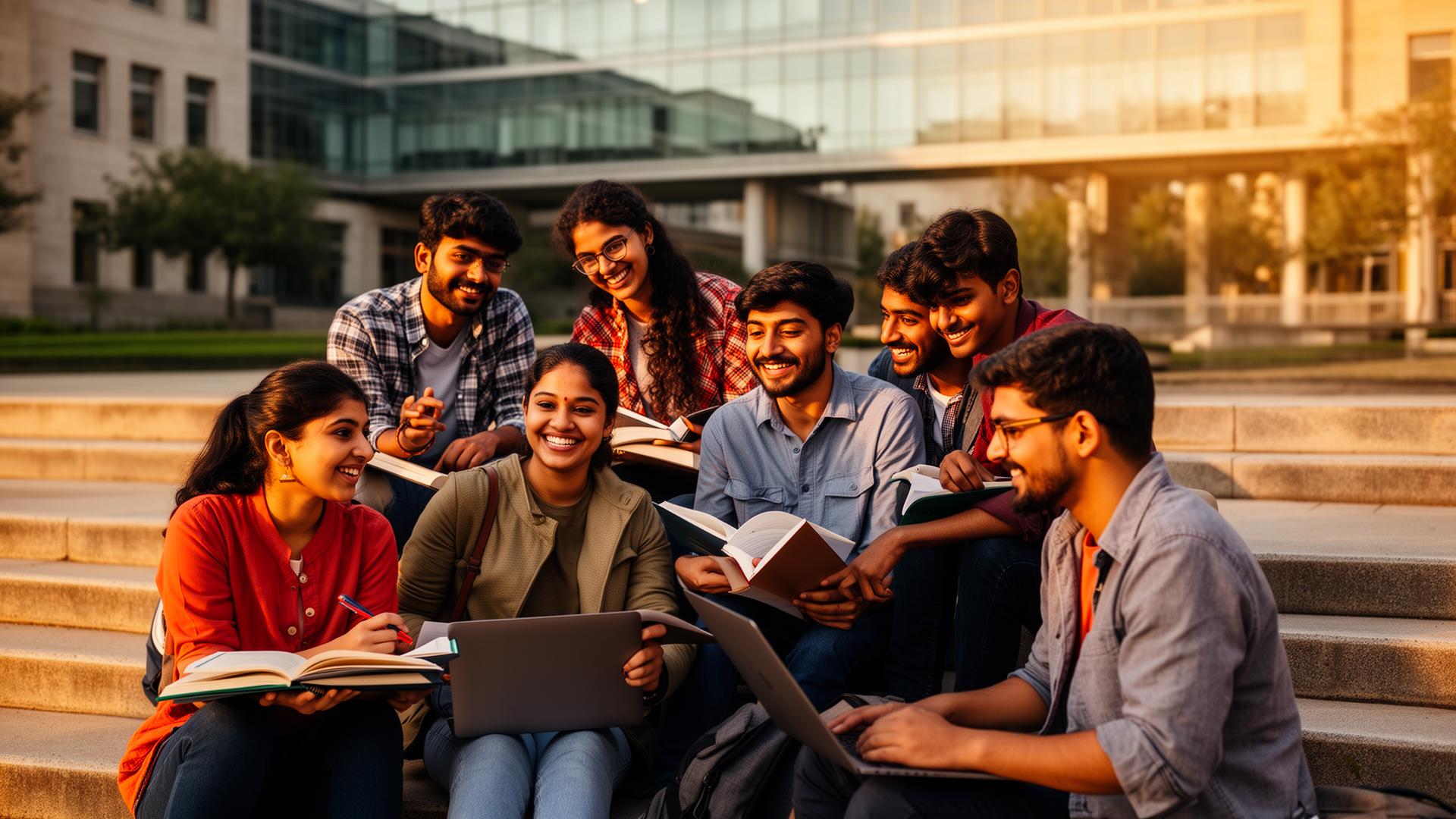
Every year, thousands of Indian students going abroad take a bold step — leaving behind familiar classrooms, family routines, and comfort zones to build a global future. They clear IELTS. They write their SOPs. They get the admit letter.
And then — some of them thrive, while others struggle to find their footing.
The difference rarely comes down to marks or the name of the university. Research and real-world experience consistently point to something deeper: the mindset, habits, and human skills that a student carries with them.
In other words, the traits of a top performer.
In this blog, we explore what it truly means to be a top performer in the context of studying abroad — and why these qualities matter far more than most students and parents realise.
What is a top performer in the study abroad context? A top performer is a student who consistently grows — academically, professionally, and personally — because they combine academic preparation with strong soft skills like adaptability, emotional regulation, strategic thinking, and effective communication.
The Myth: Marks and Degrees Are Enough
Let’s address something that most students believe: if I get into a good university abroad, everything will work out.
It’s an understandable belief. Years of board exams, entrance tests, and competitive admissions have trained Indian students to measure success in numbers. But global employers and international universities are increasingly looking beyond transcripts.
According to the India Skills Report 2025, only about 55% of Indian graduates are projected to be globally employable — with soft skills cited as the primary gap. Communication, critical thinking, adaptability, and learning agility remain underdeveloped despite strong technical foundations.
This gap becomes especially visible when Indian students abroad step into international classrooms, group projects, visa interviews, or campus placements. Academic knowledge alone doesn’t bridge cultural differences, manage test anxiety, or help you network confidently in a new country.
That’s where the traits of high performers make all the difference.
Why Do Indian Students Go Abroad to Study?
Before we get into the skills, it’s worth understanding the motivation — because purpose drives preparation.
Why Indian students go abroad to study has shifted significantly over the last decade. It’s no longer just about getting a foreign degree. Today’s students are seeking global exposure, stronger career pathways, higher earning potential, post-study work opportunities, and in many cases, permanent residency in countries like Canada, Australia, the UK, and Germany.
According to the India Skills Report 2025, the demand for globally competitive skills among Indian graduates is higher than ever — and studying abroad is one of the most direct routes to building them.
But here’s the thing: the decision to go abroad is only the first step. What determines overseas education success is what happens after the decision — how prepared you are, not just academically, but as a person.
7 Traits of High Performers — and What They Mean for Students Studying Abroad
These aren’t abstract corporate skills. Each one shows up in very real moments across a student’s study abroad journey. These are the traits of high performers that consistently separate those who merely survive abroad from those who genuinely excel.
1. Strategic Thinking
Top performers don’t follow trends — they make decisions based on long-term goals. In the study abroad context, this means choosing the right country and course based on your career direction, not just what’s popular among friends or on social media.
A student who thinks strategically asks: Will this degree open doors in the industry I want? Does this university have strong industry connections in my field? How does this pathway lead to post-study work opportunities?
Strategic thinking also shows up in IELTS and GRE preparation — knowing which sections to prioritise based on your weak areas, rather than studying everything equally.
2. Emotional Regulation
Studying abroad is emotionally demanding. Visa rejections, exam pressure, homesickness, financial stress, and cultural adjustment are all part of the journey. Students who can stay grounded during these moments — without spiralling or giving up — are the ones who come out stronger.
Emotional regulation isn’t about not feeling things. It’s about managing how you respond. This skill directly affects performance in visa interviews, group discussions, university interactions, and even IELTS speaking tests.
3. Effective Delegation and Seeking Help
One of the most common mistakes Indian students studying abroad make is trying to navigate everything alone — university shortlisting, SOP writing, visa documentation, loan applications — often without the right expertise.
Top performers know when to seek guidance. They understand that asking for help is not a weakness; it’s efficiency. Whether it’s leaning on a mentor, a counsellor, or a specialist, they invest in the right support at the right time.
4. Listening to Learn
International classrooms are diverse. Professors, peers, and professionals will share perspectives very different from what you’ve grown up with. Students who actively listen — not just to respond, but to understand — build stronger relationships, perform better academically, and grow faster professionally.
This trait also matters during counselling sessions. Students who listen carefully to guidance about university choices, essay direction, or interview prep tend to make better decisions than those who come in with fixed assumptions.
5. Setting Clear Boundaries and Priorities
Life abroad comes with enormous freedom — and enormous responsibility. Managing finances, balancing study and part-time work, maintaining mental health, and staying focused on your goals all require the ability to prioritise well.
Students who set clear boundaries — with their time, energy, and spending — tend to thrive. Those who don’t often find themselves overwhelmed by the end of the first semester.
6. Receiving and Acting on Feedback
International academic environments expect students to engage critically — with professors, peers, and their own work. Assignments are often evaluated on the quality of arguments, not just the accuracy of information.
Students who can receive feedback without defensiveness and use it to improve consistently outperform those who take criticism personally. This applies equally to SOP reviews, mock interviews, and IELTS speaking or writing practice.
7. Adapting to Change
Perhaps the most essential trait for any top performer going abroad: the ability to adapt. New country, new culture, new education system, new social norms.
Research by NAFSA consistently shows that students who study abroad develop stronger adaptability and problem-solving skills — qualities that 90% of U.S. employers say they actively look for in candidates.
But adaptability doesn’t always come naturally. It is built — through exposure, mentorship, structured preparation, and the confidence that comes from knowing you are not walking into the unknown alone.
Why These Traits Matter More for Indian Students Going Abroad
Indian students are known for academic rigour, mathematical ability, and English fluency. These are genuine strengths. But the global education environment demands more.
When Indian students going abroad step into an international campus, they are competing and collaborating with students from dozens of countries. They are assessed not just on what they know, but how they think, communicate, and solve problems.
Cultural adjustment is real. Homesickness is real. The pressure to justify a significant financial investment — often a family decision — is real. None of these challenges are solved by a high CGPA alone.
The students who achieve overseas education success are those who arrived prepared — not just with the right test scores, but with the right mindset and the right human skills to back them up.
Can These Traits Be Learned? Absolutely.
Here’s the most important thing to understand: none of these are fixed personality traits you either have or don’t have. Every single one of them can be developed with the right guidance and consistent practice.
So what is personality development, really? It’s the structured process of building self-awareness, communication confidence, emotional intelligence, and interpersonal skills — all of the qualities that help you succeed not just in exams, but in real-world environments like international classrooms, visa interviews, and global workplaces.
How to develop personality as a student is a question with a very practical answer: you work on it deliberately. Strategic thinking improves when you have structured career counselling that maps your strengths to real opportunities. Emotional regulation grows when you practice in high-stakes settings like mock IELTS speaking tests or visa interview simulations. Communication skills and personality development go hand in hand — you can’t have one without investing in the other.
This is precisely why holistic preparation — not just exam coaching — matters so much.
How GS Global Academy Builds Top Performers
At GS Global Academy, we believe that getting an admit is only the beginning. The real goal is helping you become the kind of top performer who thrives once you arrive — academically, professionally, and personally.
Here’s how we support you beyond the application:
- Career Counselling and Psychometric Testing: We start with understanding who you are — your strengths, aptitude, and long-term goals — before recommending countries, courses, or universities.
- Structured IELTS and Test Prep: Our certified trainers use skill-wise preparation, regular mock tests, and personalised feedback to build both your score and your confidence.
- SOP and Interview Mentoring: We help you tell your story effectively — in your personal statement, visa interview, and university applications.
- Personality Development Classes: For students in Pune searching for personality development classes near me, GSGA offers dedicated programs focused on communication skills and personality development — covering everything from spoken English and public speaking to emotional intelligence and professional presence.
- End-to-End Support: From shortlisting to post-arrival settlement, we walk with you through every stage of the journey.
Success abroad isn’t just about getting an admit. It’s about becoming the kind of person who thrives once you get there.
Frequently Asked Questions
What makes someone a top performer in a study abroad environment?
A top performer abroad combines academic preparation with strong soft skills — adaptability, emotional resilience, communication, and the ability to seek help and act on feedback. Grades matter, but these human skills determine how well a student actually thrives in a new country and culture.
Are the traits of high performers something you are born with?
No. Research and practical experience both confirm that these traits are learnable. With structured mentorship, consistent practice, and the right environment, any student can develop the skills that drive long-term success.
. Why do Indian students go abroad to study?
The reasons go beyond just getting a foreign degree. Indian students studying abroad are seeking global exposure, better career pathways, post-study work opportunities, and in many cases, long-term residency. Increasingly, they also go to build the global competencies that Indian employers and multinational companies now actively look for.
What is personality development and why does it matter for students?
Personality development is the process of building self-awareness, communication confidence, emotional intelligence, and interpersonal skills. For students planning to study abroad, it directly affects performance in visa interviews, group discussions, campus networking, and long-term career success in global environments.
How to develop personality as a student preparing for overseas education?
Start with structured career counselling to understand your strengths and direction. Then invest in spoken English, communication training, and mock interview practice. Personality development classes — like those offered at GSGA in Pune — provide a structured environment to build these skills alongside your academic preparation.
Where can I find personality development classes near me in Pune?
GS Global Academy offers dedicated personality development classes in Pune as part of its holistic overseas education preparation program. These cover communication skills and personality development, public speaking, emotional intelligence, and professional confidence — all designed with the study abroad student in mind.
How early should a student start building these skills for overseas education success?
As early as possible — ideally from the moment you decide to pursue overseas education. The earlier you start developing communication skills, understanding your career direction, and preparing holistically, the stronger your application and the smoother your transition abroad.